


L-theanine and caffeine: why the pairing works
L-theanine is an amino acid from the tea plant. We explain what a 2014 meta-analysis found when it is paired with caffeine, the doses trials use, why matcha feels different from coffee, and how the L-theanine in Peak Calm and Peak Hype compares.
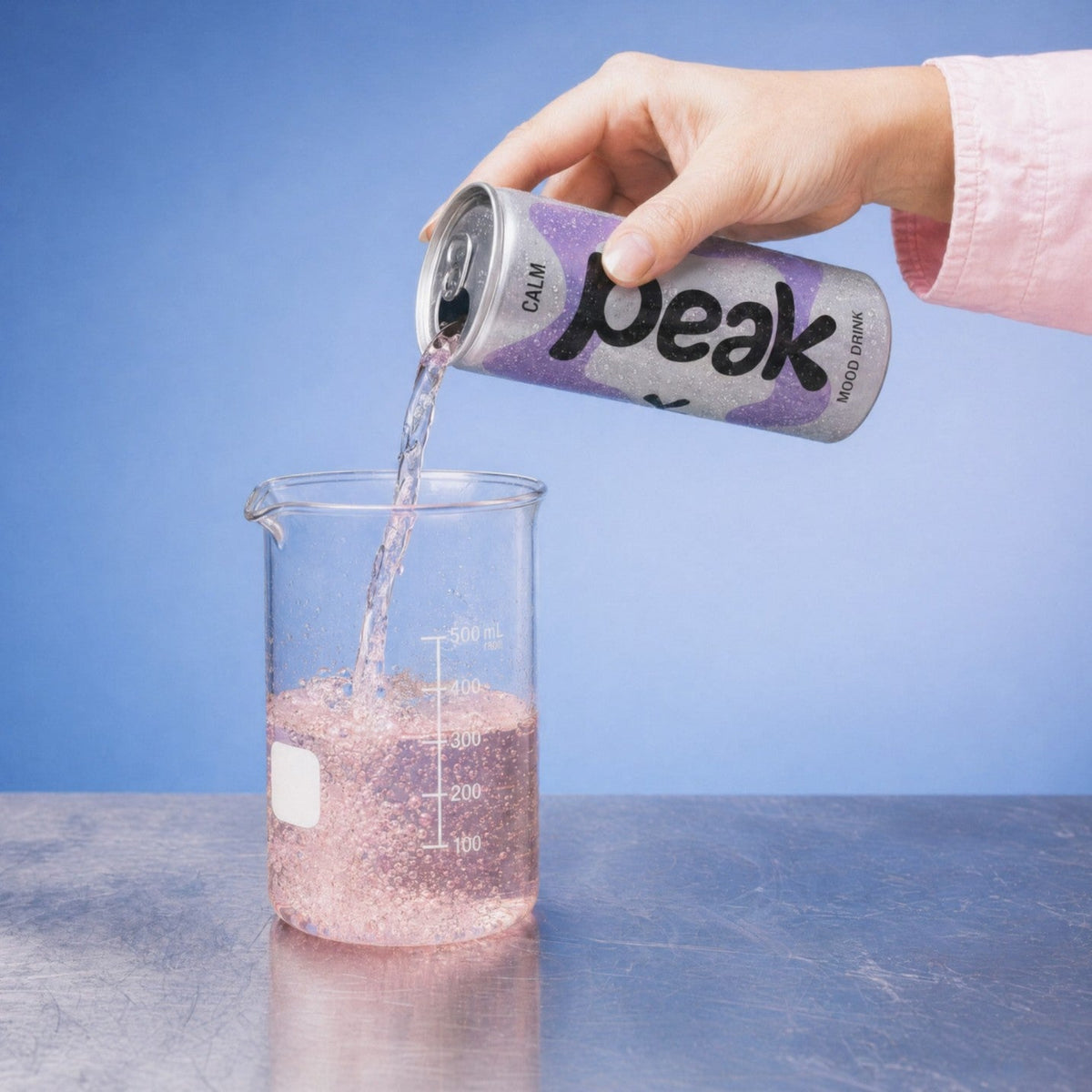
L-theanine is an amino acid from the tea plant, and trials that pair it with caffeine have found moderate gains in alertness and attention switching in the first two hours. A 2014 review of 11 trials found that the caffeine dose drove more of that effect than the L-theanine dose. Most trials used 100mg to 400mg of L-theanine, which is more than you will find in a can of Peak.
- L-theanine is an amino acid found in the tea plant and some mushrooms.
- A 2014 meta-analysis of 11 placebo-controlled trials found moderate effects on alertness and attention switching when L-theanine and caffeine were taken together, mostly in the first two hours.
- Trials usually give 100mg to 400mg of L-theanine, while a 200ml cup of green or black tea holds around 8mg to 25mg.
- Matcha varies widely. One review compares high-theanine matcha at about 41mg of L-theanine per gram with low-theanine matcha at about 8.5mg, and most packs do not list it.
- Peak Calm has 50mg of L-theanine and no caffeine. Peak Hype has 25mg of L-theanine and 60mg of caffeine from guayusa. High caffeine content. Not recommended for children or pregnant or breastfeeding women.
What is L-theanine?
L-theanine is an amino acid, one of the small building blocks found in food. It is known as a non-protein amino acid, which means your body does not use it to build proteins.
It occurs naturally in the tea plant, Camellia sinensis, and in some mushrooms. It makes up about 1% to 2% of the dry weight of tea leaves, according to a 2026 mini-review by Cotter and Kilpatrick.
A standard 200ml cup of green or black tea gives you about 8mg to 25mg of L-theanine, depending on the tea and how you make it. Coffee is not on the list of L-theanine sources, so your morning flat white brings its caffeine on its own. Tea, meanwhile, has been quietly serving a two-ingredient formula for centuries without a single product launch.
What does the research say about L-theanine and caffeine together?
The best-known summary is a 2014 systematic review and meta-analysis by Camfield and colleagues, published in Nutrition Reviews. A meta-analysis pools the results of several studies to see what holds up across all of them. The team looked at 11 randomised, placebo-controlled human trials of tea compounds, taken alone or with caffeine.
When people took L-theanine and caffeine together, the review found moderate effects in the first two hours on how alert people said they felt. It found a similar effect on attention switching accuracy, which measures how well you move between two tasks. Effects on some other attention tests were smaller.
Here is the part many articles leave out. When the researchers compared doses, the size of the effect showed a stronger trend with the caffeine dose than with the L-theanine dose, especially in the first hour. Caffeine was doing more of the work.
To picture a typical trial, a 2008 study by Owen and colleagues gave 27 healthy volunteers 50mg of caffeine, with and without 100mg of L-theanine. At 60 minutes, the pair gave faster and more accurate scores on an attention switching task than a placebo.
How much L-theanine do studies use?
Most trials give between 100mg and 400mg of L-theanine in a single dose. The 2026 mini-review in Frontiers in Nutrition found that doses in this range gave small but statistically significant gains on some attention tasks, mostly visual ones, in healthy adults. Both authors worked for a company that sells products containing L-theanine, and the paper says so openly.
The same review notes that trials reporting an added effect with caffeine used at least 100mg of L-theanine. Those trials gave one to two times as much L-theanine as caffeine. The authors are clear that the best dose and ratio are still an open question.
In the trials the review covers, L-theanine was well tolerated, with side effects similar to placebo. Those were short studies, so the long-term picture is still being filled in.
Why does matcha feel different from coffee?
Matcha is green tea ground into a fine powder, so you drink the whole leaf rather than water that has passed through it. The plants are shaded before harvest, which protects the L-theanine in the leaf and holds back the catechins that give tea its dry, astringent edge. That is why a bowl of matcha brings caffeine and L-theanine together.
The amounts vary more than most people expect. A 2026 review by Unno and colleagues reports high-theanine matcha at about 41mg of L-theanine per gram and low-theanine matcha at about 8.5mg per gram. It also points out that most matcha products do not list their theanine content.
A 2022 lab test of three shop-bought matchas found 4.2mg to 9.9mg of L-theanine and 14.1mg to 16.1mg of caffeine per gram. In a 2024 Japanese trial sponsored by the tea company ITO EN, 23 healthy adults took 2.7g of matcha a day in capsules for four weeks. That daily amount held 50.3mg of L-theanine and 71.5mg of caffeine, which is about half the lowest trial dose of L-theanine.
So why might matcha feel different from an espresso? L-theanine is part of the story, but the Camfield review suggests that how much caffeine you get matters even more. If you are weighing up your options, our guide to the best coffee alternatives in the UK compares them side by side.
What about L-theanine, caffeine and ADHD?
Plenty of people with ADHD hear about this pairing from friends or online, so it deserves a straight answer. The individual trials in this article recruited healthy adults, and the 2026 mini-review covers healthy adults too. These results tell us about the ingredients in general, and ADHD research is a separate question.
What we can talk about is ritual. Many of us like a clear signal that work has started, whether that is a bowl of matcha, a walk or a cold can. If you take supplements or ADHD medication, your GP or pharmacist is the right person to ask about adding anything new.
How much L-theanine is in a can of Peak?
We put L-theanine in both of our drinks. Peak Calm has 50mg of L-theanine and no caffeine, and it is made for relaxing at any stressful moment. Peak Hype has 25mg of L-theanine with 60mg of caffeine, all of it from guayusa, an Amazon holly leaf. High caffeine content. Not recommended for children or pregnant or breastfeeding women.
A can is not a trial dose, and we would rather say that plainly. The 25mg in Hype is a quarter of the lowest dose most trials use, and Hype carries more caffeine than L-theanine, the reverse of the ratios in the mini-review. So we share these studies as the science of the ingredient, and we describe Hype by what is in it.
What Hype gives you is the pairing people know from tea, in a berry citrus can with 250mg of tyrosine and caffeine from a leaf that Amazonian hunters call the Night Watchman. We made it to feel lifted, not wired. You can read the full story of the leaf in our guayusa guide, and see why we make two moods in What is a mood drink?
Meet Hype, made with guayusa and tyrosine.
Frequently asked questions
Does matcha have L-theanine and caffeine?
Yes. Matcha contains both, because you drink the whole powdered leaf. A 2022 lab test of three matchas found 4.2mg to 9.9mg of L-theanine and 14.1mg to 16.1mg of caffeine per gram, and higher grades can hold much more L-theanine.
When should you take L-theanine and caffeine together?
In the research, the effects showed up within the first two hours after the dose. Owen and colleagues tested people 60 and 90 minutes after the dose. Those timings describe what researchers measured rather than a personal plan, so check with a pharmacist if you take other supplements or medicines.
How much L-theanine is in a cup of tea?
A standard 200ml cup of green or black tea holds about 8mg to 25mg of L-theanine. The amount depends on the type of tea and how you make it.
Is L-theanine safe?
In trials using about 50mg to 500mg, L-theanine was well tolerated, with side effects similar to placebo. Most of those trials were short, so researchers are still studying long-term use.
Sources
- Camfield DA, Stough C, Farrimond J, Scholey AB (2014). Acute effects of tea constituents L-theanine, caffeine, and epigallocatechin gallate on cognitive function and mood: a systematic review and meta-analysis. Nutrition Reviews.
- Cotter J, Kilpatrick HE (2026). Effects of L-theanine on cognition, mood and sleep: evidence from human trials. Frontiers in Nutrition.
- Owen GN, Parnell H, De Bruin EA, Rycroft JA (2008). The combined effects of L-theanine and caffeine on cognitive performance and mood. Nutritional Neuroscience.
- Unno K, Kameoka Y, Nakamura Y (2026). Compositional diversity and functional interactions of bioactive compounds in Japanese green tea: focus on matcha, sencha and gyokuro. Molecules.
- Koláčková T and colleagues (2022). The effect of in vitro digestion on matcha tea active components and antioxidant activity. Antioxidants.
- Baba Y, Takihara T, Okamura N (2024). Matcha does not affect electroencephalography during sleep but may enhance mental well-being: a randomized placebo-controlled clinical trial. Nutrients.
Pick your mood
Lifted, not wired. Relaxed, not tired.

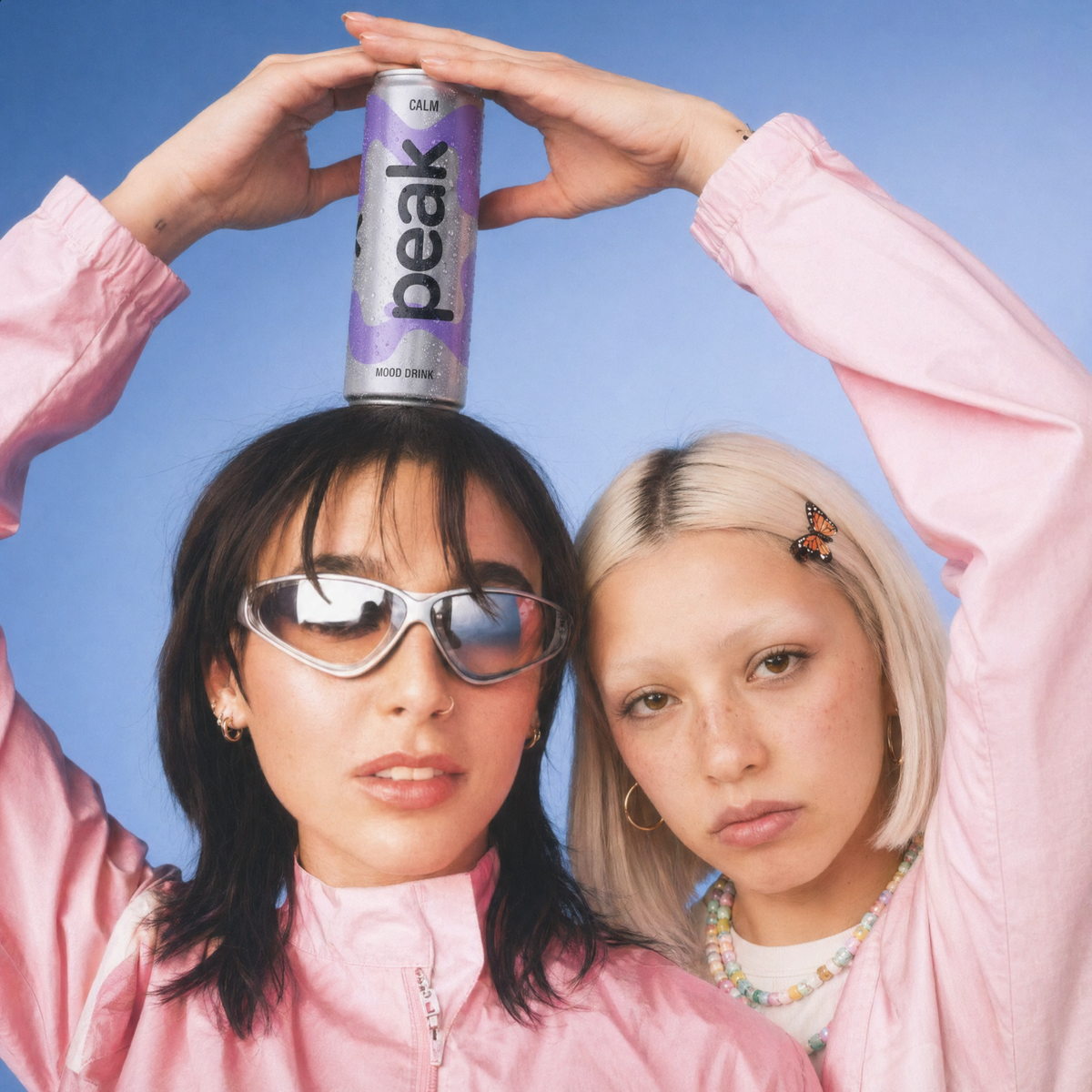
Calm
Meet Calm
A caffeine-free sparkling peach drink with magnesium, L-theanine, glycine and L-tryptophan, made for unwinding.

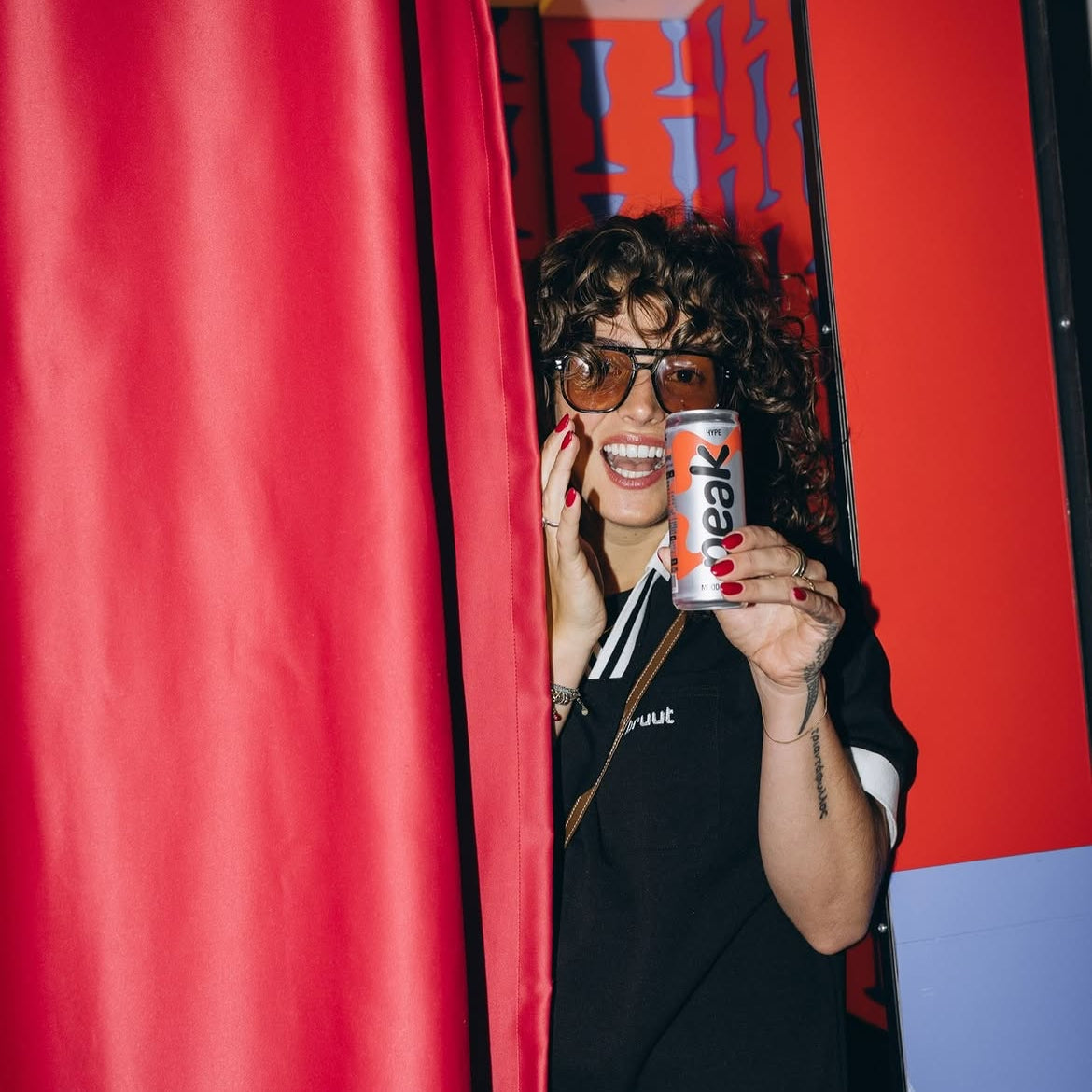
Hype
Meet Hype
A sparkling berry citrus drink with 60mg of caffeine from guayusa, plus L-theanine and tyrosine.
 Alcohol-freeThe best alcohol-free drinks for a night outMost people who order alcohol-free drinks still drink, just less often and less each time. Here are the best alcohol-free options for a night out, from 0% beer to mocktails...
 IngredientsGuayusa: the Amazon leaf behind Peak HypeGuayusa is a caffeinated holly from the upper Amazon and a cousin of yerba mate. Our guide covers the Night Watchman story, Kichwa dawn gatherings, its smooth taste, its caffeine,...
 CaffeineThe best coffee alternatives in the UK, comparedThe best coffee alternative depends on how much caffeine you want. We compare matcha, mushroom coffee, chicory, yerba mate, guayusa and Peak by caffeine, taste and feel.