


ADHD and caffeine: why coffee can make you sleepy
Why coffee can leave ADHD brains sleepy one day and wired the next, told from the inside, with easy ways to make caffeine work for you.

You make a coffee to get going, and an hour later you could happily nap under your desk. If you are ADHD, there is a good chance you know that feeling well, along with its opposite, when the same cup leaves your thoughts racing and your leg bouncing.
Coffee can make you sleepy because caffeine holds tiredness back for a while, so it all comes flooding in as the cup wears off, and plenty of ADHD brains are running on a short night to begin with. The wired feeling comes from the other end, when the dose is bigger than your body wants right now.
The quick version
- Caffeine holds back the chemical that makes you feel sleepy, and that tiredness arrives as the caffeine fades.
- Lots of ADHD adults are natural night owls, which can mean a sleep debt under the first coffee.
- Some people with ADHD find caffeine grounding, and that settled feeling can drift into drowsiness.
- Jitters and that wired buzz tend to follow a big dose, an empty stomach or a stack of cups.
- A caffeine curfew and a dose you can count on make the biggest difference.
Why can coffee make you sleepy?
All day, your brain builds up a chemical called adenosine, and the more of it there is, the sleepier you feel. Caffeine sits in the spots adenosine wants to use, a bit like a key that fits a lock and never turns, so you feel awake while the tiredness quietly queues up behind it.
Habit plays a part too. Regular coffee drinkers build up tolerance, so the lift gets smaller and the dip afterwards is easier to notice.
Is feeling sleepy after coffee an ADHD thing?
It can feel like one, and sleep is a big part of the picture. In a 2024 study of more than 3,600 adults with ADHD in the Netherlands, around 60% screened positive for at least one sleep disorder, and the most common sign was a body clock that runs late. If your brain only gets interesting at midnight, you will recognise that.
There is a calm side as well. London psychologist Dr Elena Touroni writes that for many people with ADHD, caffeine brings a grounded, steady feeling, and that this calm can tip over into drowsiness. Plenty of us know the strange relief of a coffee that quietens the noise in our heads.
Why does coffee sometimes make you jittery and wired?
Then there are the days when coffee goes the other way. Your heart picks up, your hands feel buzzy, you open fourteen tabs and finish none of them, and by the afternoon you feel scattered and tired at the same time.
That wired feeling usually comes down to dose and timing. A big mug on an empty stomach, a second cup stacked on the first or caffeine after a rough night can all tip you over, and when your brain is already juggling a lot of input, you tend to feel it fast. Our guide to why coffee makes you jittery goes deeper.
Our founder Louie knows this one well. "In 2019 I was working 18 hour days across time zones, with calls to partners in LA at 10pm," he says. "I was drinking coffee to keep going in the day and alcohol to switch off at night, and the coffee made me wired and anxious."
How do you make caffeine work for your brain?
Treat caffeine as something you choose for a moment. Here is what works for a lot of us:
- Give it a curfew. In one well known sleep study, people who had caffeine six hours before bed lost more than an hour of sleep without noticing, so a mid afternoon cut-off protects your night.
- Save it for something. Deep work, a run, a studio session or a gig are all great reasons to reach for a cup.
- Keep a caffeine free favourite in the fridge. A cold drink you love makes the afternoon cut-off easy to keep.
Where does Peak fit?
Louie is ADHD, autistic and mildly dyslexic, and after quitting coffee he first drank guayusa in 2020. "I couldn't believe how clear and steady I felt," he says. "I've drunk it every day since, and it's the reason Peak exists." Our guide to guayusa tells the story of the leaf.
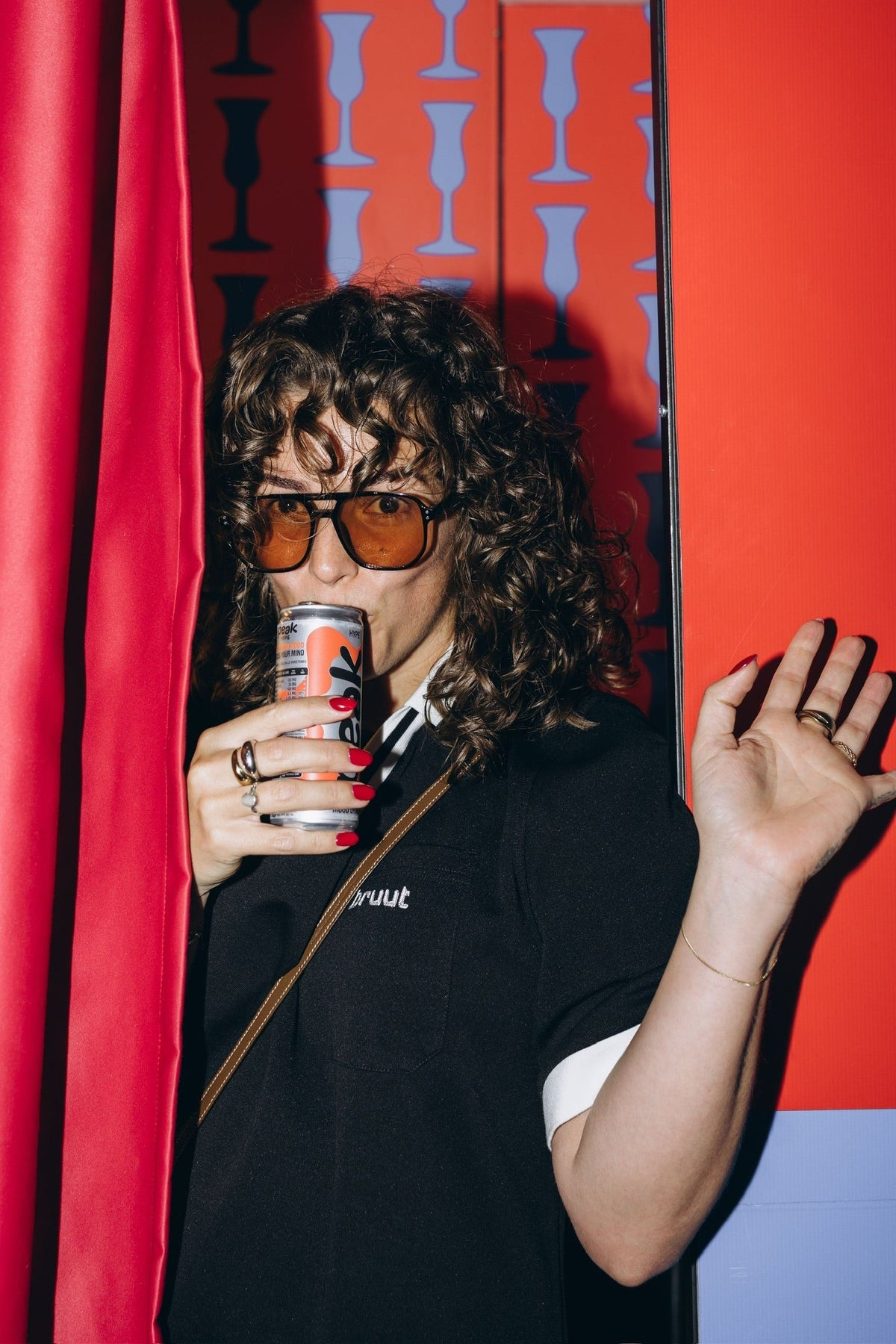
Hype is our lifted mood: lifted, not wired. It is a lightly sparkling berry citrus drink with a known 60mg of caffeine in every can, all from guayusa, which is a little less than a mug of instant coffee and easy to plan your day around. Calm is its caffeine free partner, in juicy peach, for afternoons and evenings. Lots of our community are neurodivergent, and we love hearing how they fit each mood into their week.
Try Peak Hype, the berry citrus mood drink. Hype contains caffeine and is not recommended for children or for women who are pregnant or breastfeeding.
Common questions
Does feeling sleepy after coffee mean I am ADHD?
Lots of people feel it after a short night or once their tolerance builds, so it is one clue among many. If you think you might be ADHD, your GP is a good first conversation.
Do people with ADHD drink more coffee?
A 2022 survey of 2,259 adults in Hungary found caffeine intake was much the same whatever someone's level of ADHD symptoms. People with stronger symptoms did find it harder to cut back.
Can you have caffeine with ADHD medication?
It depends on your medicine and your dose, so your prescriber or pharmacist is the best person to ask.

Pick your mood
Lifted, not wired

Hype
Meet Hype
A sparkling berry citrus drink with 60mg of natural caffeine from guayusa, plus L-tyrosine and B vitamins.
 Mood drinksDrinks for creative work: from the studio to the deskEvery creative day has its moods. Here are the best drinks for creative work, from the blank page to the final mix, and the rituals that go with them.
 Alcohol-freeWhat to drink before and after run clubRun club is the new night out. Here is what to drink before and after a run, from the warm up to the post-run ritual, and where Peak fits in.
 Alcohol-freeSober curious in the UK: the new night outSober curious is changing the night out in the UK. Here is what it means, why young Brits are leading it, and how to make a night without alcohol feel...