


Guayusa: the Amazon leaf behind Peak Hype
Guayusa is a caffeinated holly from the upper Amazon and a cousin of yerba mate. Our guide covers the Night Watchman story, Kichwa dawn gatherings, its smooth taste, its caffeine, and how it gives every can of Peak Hype 60mg of caffeine.
Guayusa (say "gwhy-you-sah") is the leaf of Ilex guayusa, a caffeinated holly tree from the upper Amazon and a close cousin of yerba mate. Kichwa families in Ecuador have brewed it for generations, and it makes a smooth, slightly sweet drink with caffeine and a little theobromine, the compound best known from chocolate. It is also the Amazon leaf behind Peak Hype, and this guide covers everything we know about it.
- Guayusa is one of only four known hollies that contain caffeine, and yerba mate is another.
- Its leaves contain roughly 1.7% to 3.5% caffeine, plus theobromine.
- The oldest known guayusa is a bundle of leaves about 1,500 years old, found in a medicine man's tomb in the Bolivian Andes.
- The EU approved water extracts of dried guayusa leaves as a novel food in December 2017.
- Each can of Peak Hype has 300mg of guayusa extract, which gives it 60mg of caffeine. High caffeine content. Not recommended for children or pregnant or breastfeeding women.
What is guayusa?
Guayusa is a rainforest tree in the holly family. It grows in the upper Amazon of Ecuador, Peru and southern Colombia, between about 200m and 2,000m above sea level (Ilex guayusa reference). People pick the leaves, dry them and brew them in hot water, much as they would tea.
Botanically, guayusa sits with the hollies, while everyday black and green tea come from a different plant, the tea plant. So "guayusa tea" is really a herbal infusion, in the same way that peppermint tea is. Its best-known relative is yerba mate, another South American holly.
Here is the fact we like most. The oldest evidence of people using guayusa is a bundle of leaves around 1,500 years old, found in the tomb of a medicine man in the Bolivian Andes (Ilex guayusa reference). People have valued this leaf for a very long time.
Why is guayusa called the Night Watchman?
Amazon hunters gave guayusa a nickname, the Night Watchman, because it kept them awake and alert when they hunted after dark (Pachamama Alliance). Sitting still in the forest at night, waiting for an animal to move, is exactly the moment when you want a clear head.
The written record goes back centuries. In 1682 a Jesuit priest called Juan Lorenzo Lucero wrote that the Jivaro people drank guayusa to stay awake for many nights when they feared an invasion (NutraIngredients). The Jivaro also linked the leaf with dreaming, and believed that vivid dreams after drinking it could foretell how a hunt would go (Art of Tea).
Outside the Amazon, the leaf was largely forgotten for a long time. A 1968 article in the journal Economic Botany called guayusa "a neglected stimulant from the Eastern Andean Foothills" (NutraIngredients). Today you can find it as loose-leaf tea and in cans, including ours.
How do Kichwa families drink and grow guayusa?
The best-known way to drink guayusa is the guayusada, a Kichwa gathering at dawn, where families brew guayusa together, share their dreams from the night before and plan the day ahead (The Gin Guild). Some Kichwa communities still wake around 4am to drink it, and the gatherings can include music and dancing (NutraIngredients).
The Kichwa word "runa" describes how a person feels after drinking guayusa, and it translates as "fully alive" (Pachamama Alliance). We think a shared pot and a conversation about last night's dreams is a brilliant way to begin a day. It turns the first drink of the morning into a ritual you do with other people.
The same families grow guayusa in chakras, which are family forest gardens (Ilex guayusa reference). The tree thrives in shade, so it grows under the canopy of other rainforest trees (Pachamama Alliance).
Growing a crop this way keeps the forest standing around it. It also gives farming families a steady reason to look after the trees above their guayusa rather than clear them (Pachamama Alliance).
The guayusa in Hype comes from Applied Food Sciences, a company in Austin, Texas, which buys leaves from independent Kichwa farming families. Its extract is certified organic in the US under USDA rules.
What does guayusa tea taste like?
Guayusa tastes smooth, earthy and subtly sweet (The Gin Guild). The leaf is low in tannins, the compounds that give over-brewed black tea its dry, bitter edge. That means a pot stays mellow even if you forget about it for a few minutes (Mountain Rose Herbs).
If you are trying it as loose leaf, brew the dried leaves in hot water as you would any herbal tea, then taste as you go. It works well plain, and Mountain Rose Herbs suggests a little honey for anyone who likes it sweeter. The same shop describes guayusa as a mild, smooth drink with less caffeine per cup than yerba mate, which makes it an easy first step for anyone new to Amazon leaves.
How much caffeine is in guayusa?
Dried guayusa leaves contain roughly 1.7% to 3.5% caffeine, depending on the sample (Ilex guayusa reference). EU figures put brewed guayusa at 19.8mg to 57.7mg of caffeine per 100ml (NutraIngredients). So a 250ml mug lands somewhere between about 50mg and 145mg, depending on how much leaf you use and how long you brew it.
The leaves also contain theobromine, a compound closely related to caffeine that is best known from chocolate and cocoa (Healthline). If you are weighing guayusa against matcha, chicory or mushroom coffee, our guide to the best coffee alternatives in the UK puts them side by side.
Is guayusa safe to drink?
The EU approved water extracts of dried guayusa leaves as a novel food on 20 December 2017, for use in herbal infusions and food supplements (NutraIngredients). EU rules allow a traditional food from outside the EU onto the market when its history of safe use elsewhere can be shown.
A 2018 study by Wise and Santander looked at three years of records in Ecuador, including hospital admissions, the national disease register, poison centre calls and food safety reports. They found one minor reported effect linked to guayusa's stimulant properties and no hospital cases, and concluded that guayusa has a history of safe use in Ecuador (Wise and Santander 2018). Guayusa contains caffeine, so the usual good sense about how much caffeine you have in a day applies.
How does guayusa end up in a can of Peak Hype?
Guayusa is the leaf that started Peak. Our founder Louie found it after giving up coffee, and in his words: "I first drank it in 2020, not long after I quit coffee, and I couldn't believe how clear and steady I felt. I've drunk it every day since."
Hype uses a guayusa leaf extract standardised to 20% caffeine (Nutritional Outlook). The maths is simple: 20% of 300mg is 60mg, so every can of Hype has exactly 60mg of caffeine, and all of it comes from guayusa. That is a little less than a regular cup of coffee. High caffeine content. Not recommended for children or pregnant or breastfeeding women.
We pair the guayusa with 250mg of L-tyrosine, the amino acid your body makes dopamine from, and 25mg of L-theanine, in a berry citrus drink with 28 calories. Our guide to L-theanine and caffeine explains why that pairing is so popular, and what is a mood drink? explains how Calm and Hype give you two moods to choose from.
Meet Hype, made with guayusa and tyrosine.
Frequently asked questions
Is guayusa the same as yerba mate?
Guayusa and yerba mate are cousins: both are South American hollies, and both contain caffeine. Guayusa is low in tannins, which gives it a smooth, subtly sweet taste. They come from two different species of the same family.
Does guayusa have as much caffeine as coffee?
A strong mug can. Brewed guayusa contains 19.8mg to 57.7mg of caffeine per 100ml, so a 250ml mug holds roughly 50mg to 145mg, depending on how you brew it.
Is guayusa tea actually a tea?
Guayusa tea is a herbal infusion. It comes from Ilex guayusa, a holly, while black and green tea come from the tea plant. You brew it the same way, in hot water.
How much guayusa is in a can of Peak Hype?
Each can of Hype contains 300mg of guayusa extract standardised to 20% caffeine, which gives 60mg of caffeine per 250ml can. High caffeine content. Not recommended for children or pregnant or breastfeeding women.
Sources
- Ilex guayusa reference entry (Wikipedia)
- The Gin Guild, guayusa
- NutraIngredients, guayusa and the EU novel food approval (2018)
- Wise and Santander 2018, Assessing the History of Safe Use of Guayusa, Journal of Food and Nutrition Research
- Pachamama Alliance, guayusa and Amazon farmers
- Art of Tea, origins of guayusa
- Mountain Rose Herbs, what is guayusa tea?
- Healthline, guayusa
- Nutritional Outlook, Applied Food Sciences guayusa extract patent
- Peak Hype product page
Pick your mood
Lifted, not wired

Hype
Meet Hype
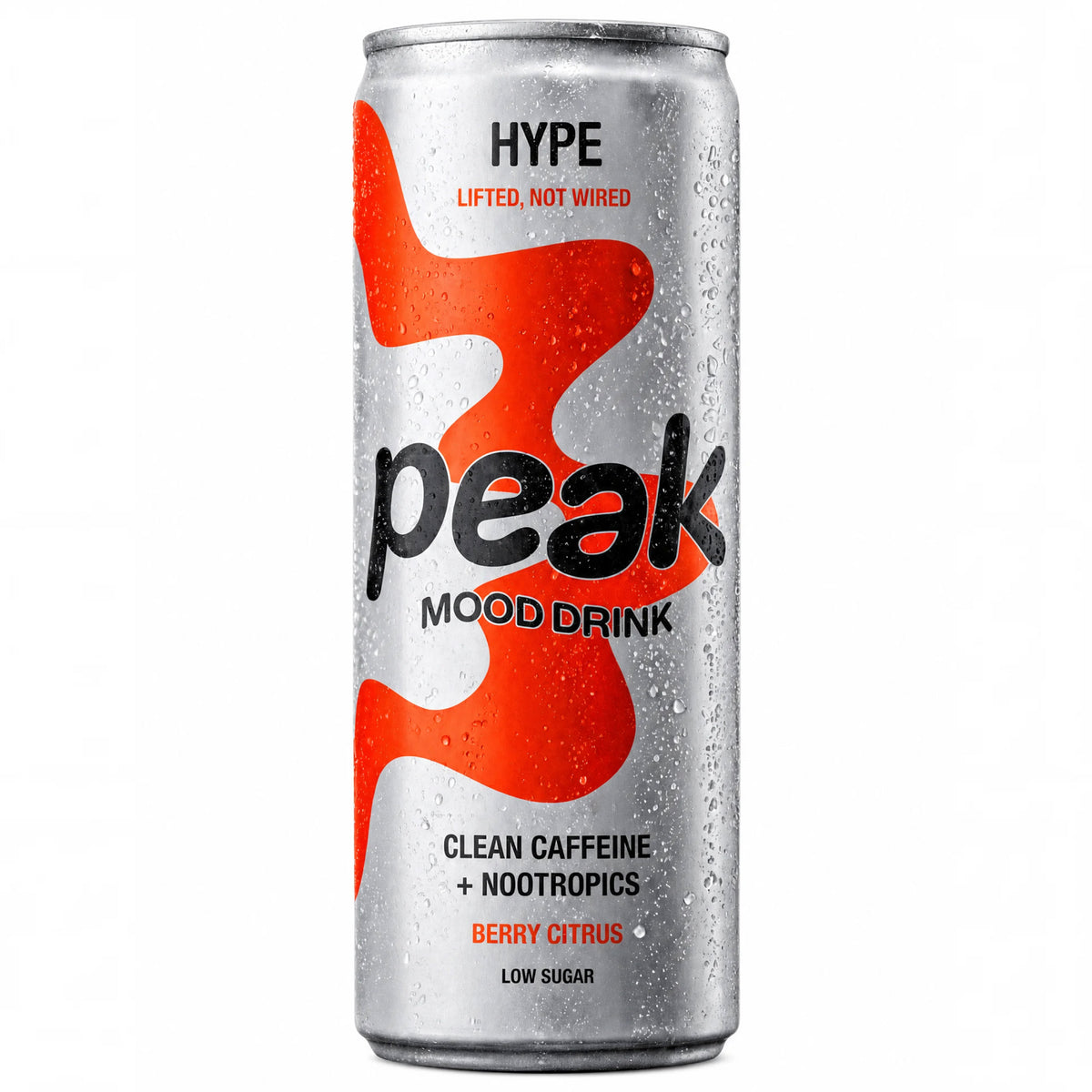
A sparkling berry citrus drink with 60mg of caffeine from guayusa, plus L-theanine and tyrosine.
 Alcohol-freeThe best alcohol-free drinks for a night outMost people who order alcohol-free drinks still drink, just less often and less each time. Here are the best alcohol-free options for a night out, from 0% beer to mocktails...
 IngredientsL-theanine and caffeine: why the pairing worksL-theanine is an amino acid from the tea plant. We explain what a 2014 meta-analysis found when it is paired with caffeine, the doses trials use, why matcha feels different...
 CaffeineThe best coffee alternatives in the UK, comparedThe best coffee alternative depends on how much caffeine you want. We compare matcha, mushroom coffee, chicory, yerba mate, guayusa and Peak by caffeine, taste and feel.