


Sunday scaries: how to make Sunday evening the best part of the week
Two in three of us get that Sunday evening dread. Here is why it happens and a simple Sunday ritual, with neurodivergent-friendly tips, to make the evening one you look forward to.

It is about five o'clock on Sunday. The roast is finished, the light is fading, the Countryfile theme tune drifts in from the next room, and your brain quietly opens Monday's inbox.
That sinking feeling is the Sunday scaries: the dread that creeps in as the weekend winds down and the working week comes into view. Almost everyone knows it, and a few small rituals can turn Sunday evening into one of the best parts of the week.
The quick version
- Two in three adults in England know the feeling well, and younger adults most of all.
- Weekend emails and jobs left over from Friday tend to turn the volume up.
- A short list of tomorrow's tasks at bedtime gives a busy mind somewhere to put its thoughts.
- A Sunday ritual you love gives the evening a happy anchor.
- If the dread follows you into the week, talking to someone really helps.
What are the Sunday scaries?
They are the restless, slightly anxious mood that settles in on a Sunday afternoon. For some people it is a knot in the stomach, and for others a mental to-do list that keeps scrolling.
You are in very good company. In a 2022 survey for Every Mind Matters, 67% of adults in England said they regularly get the Sunday scaries, rising to 74% of 18 to 24 year olds.
Why do I get anxious on a Sunday?
Mostly, your brain is looking ahead. Sunday evening is when the week starts to feel close, so everything unfinished comes knocking at the same moment.
Researchers at the University of Exeter, working with Channel 4, found that weekend emails and leftover tasks make the feeling stronger, especially when home and work blur together. People who love their jobs get it too, so it says more about the inbox than about you.
The evening itself matters too, since hours of doomscrolling can leave you more wired by bedtime.
How do you build a Sunday ritual you look forward to?
Give your Sunday a gentle running order, and save the evening for the good stuff. Borrow the whole plan, or pick one or two lines to start with:
- Friday, before you log off. Write next week's to-do list, so Monday's jobs are parked on paper.
- Sunday morning. Get outside and move, whether that is run club, a swim or a muddy walk with friends.
- Sunday afternoon. Lay out your clothes, pack your bag and make Monday's lunch.
- Early evening. Close the laptop and put it somewhere out of sight.
- Evening. Run a bath, put on a record or pour a favourite drink into a nice glass.
- Bedtime. Spend five minutes writing tomorrow's tasks in detail.
That bedtime list is a small trick with a great story behind it. In a 2018 sleep lab study, young adults who wrote a five-minute to-do list fell asleep faster than those who wrote about jobs they had already finished.
Finally, give Monday something to look forward to, like lunch with a friend or a gig after work.
What helps if your brain works differently?
For lots of neurodivergent people, the switch from weekend to working week is a big change in routine, so Sunday evening can feel heavier. A small, visible plan works best, because it still works on a low day.
- Pick one anchor for Sunday evening, the same thing at the same time each week.
- Put the plan where you will see it, like a sticky note on the fridge or a recurring phone reminder.
- Set a 15 minute timer for Monday prep and stop when it rings.
- Write Monday's first task in plain words, so you know exactly where to begin.
- Choose a sensory comfort you love, such as a weighted blanket or a favourite playlist.
Any part of the plan counts, and a busy Sunday where you skip a step is completely fine.
However your brain works, if the Sunday feeling starts following you through the week or keeps you awake most nights, it is worth talking to someone. Your GP is a great place to start, and Mind (0300 123 3393) offers warm, confidential support.
Where does Peak Calm fit?
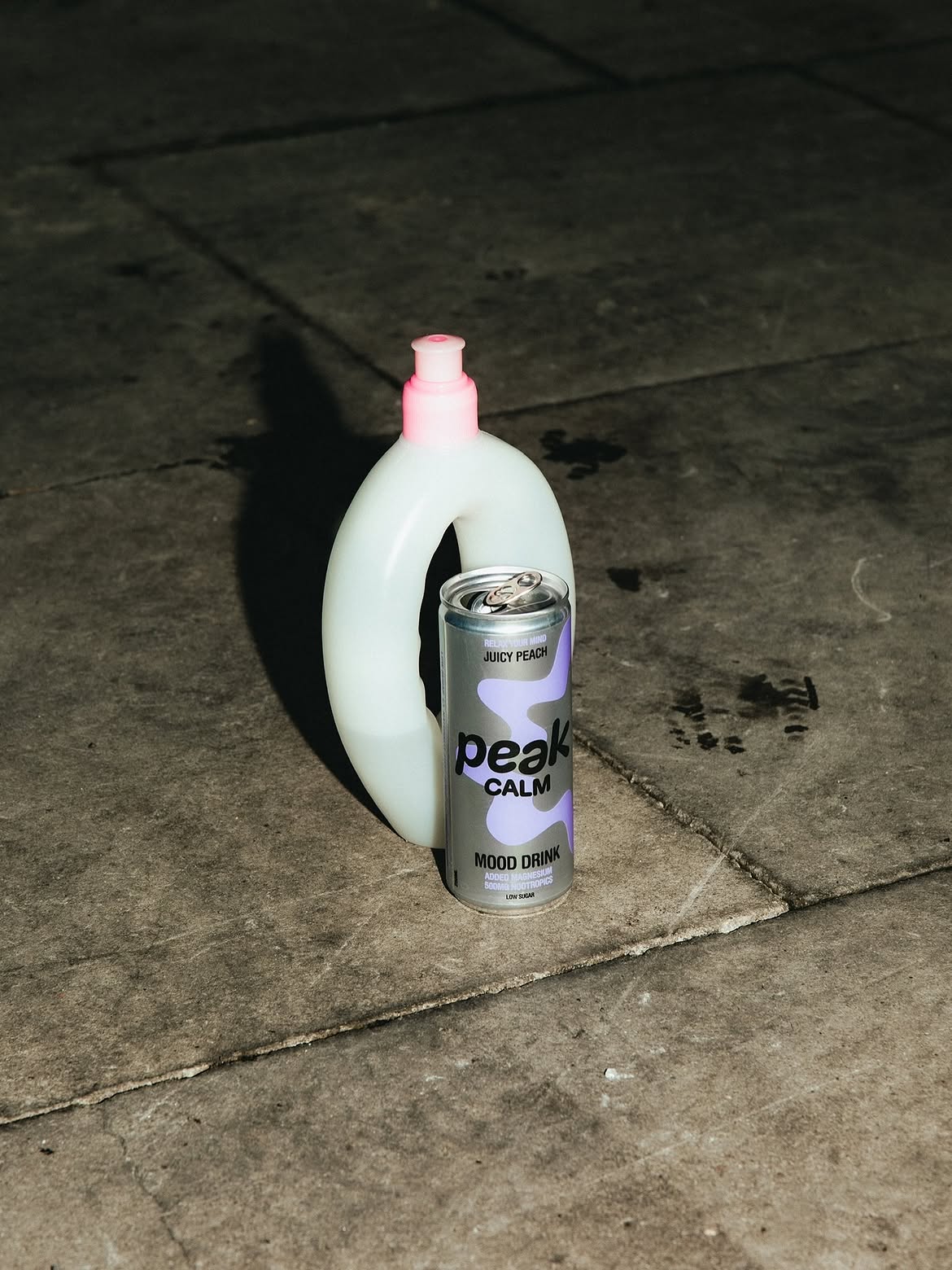
A ritual is easiest to keep when it involves something you genuinely love. For a lot of our community, that is Peak Calm, our caffeine free mood drink in lightly sparkling juicy peach. Its mood is relaxed, not tired, which suits a Sunday evening perfectly.
People crack one open once the Monday jobs are done, pour it over ice while the bath runs, or have it with Sunday dinner as a cue that the rest of the evening is theirs. If your Sunday starts with a sore head, our hangxiety guide has you covered.
Try Peak Calm, made for your Sunday evening ritual.
Common questions
Is it normal to dread Monday every week?
Yes, it is one of the most common feelings of the week. Two thirds of adults in a large survey in England said they get it regularly.
Why do I feel anxious on Sunday when I like my job?
Liking your work and feeling Sunday dread often go together. Leftover tasks and work creeping into the weekend seem to play a bigger part than how you feel about the job itself.
Can the Sunday scaries keep you awake?
They can, because a busy mind takes longer to settle. The NHS suggests a short worry time of 10 to 15 minutes before bed, where you write each worry down and plan for the ones you can act on.
Is Peak Calm caffeine free?
Yes. Each 250ml can of Calm is caffeine free and alcohol free, with 33 calories.
Pick your mood
Relaxed, not tired

Calm
Meet Calm
A caffeine-free sparkling peach drink with magnesium, L-theanine, glycine and L-tryptophan, made for unwinding.
 CaffeineWhy coffee makes you jittery, and how to keep the liftThird flat white and your heart is racing? Here is why coffee makes you jittery, the easy habits that help, and where Peak Hype, our guayusa mood drink, fits in.
 Alcohol-freeHangxiety: why you wake up with the fear, and how to ride it outThat anxious, what-did-I-say feeling the morning after a big night has a name. Here is why hangxiety happens, how to get through the morning and how to plan a brighter...
 CaffeineHow to cut down on coffee and alcohol, from the loop that started PeakCoffee to get going and a drink to switch off is the loop our founder Louie broke in 2020, and it is where Peak began. Here is his story and...